
Assistive Reading Technology That Scales: The School District Imperative
When an educational technology coordinator or special education director evaluates reading pens for an entire campus or district, the criteria shift dramatically from those of an individual consumer. Device durability, zero-overhead IT deployment, strict compliance with student privacy laws (FERPA/COPPA), volume procurement terms, and certified testing locks take precedence over consumer features.
A successful district rollout requires matching specific hardware models to classroom environments, securing applicable federal and state funding streams, and establishing transparent testing protocols that reassure teachers and exam proctors.
Three Classroom Deployment Models: Choosing the Right Fleet Architecture
School districts typically organize reading pen deployments into three distinct operational models:
- 1. Standalone Accommodation Fleets (Zero IT / Zero MDM Overhead): In this model, districts deploy standalone reading pens (such as the Scanmarker Max or Scanmarker PAL) directly to resource rooms and special ed teachers. Because these devices operate 100% offline with onboard screens, processors, and speakers, they require zero application deployment through district Mobile Device Management (MDM), zero student accounts, zero Wi-Fi network credentials, and zero IT maintenance. A teacher simply hands the pen to a student, and reading begins immediately.
- 2. 1:1 Laptop & Chromebook Classrooms: For secondary schools where every student is issued a managed Chromebook, Mac, or Windows laptop, connected peripherals (such as the Scanmarker Pro or Scanmarker Air) are deployed as typing aids. Students scanning textbook excerpts, lab manuals, or primary historical sources have text typed directly into Google Classroom, Docs, or Canvas LMS, accelerating written assignments.
- 3. Media Center & Lending Library Resource Hubs: School libraries maintain a circulating pool of rugged, simple pens (such as the Scanmarker PAL) that students can check out for study periods or take home for evening reading assignments.
Master School Procurement Matrix: Models Compared for K-12
Volume pricing tiers, institutional purchase orders, Net-30 payment terms, and educational tax-exempt invoicing are available for qualified public and private educational institutions.
| Model | District Role & Best Fit | Unit Price | IT Requirement | Exam Compliance | Language Coverage | Durability Profile |
|---|---|---|---|---|---|---|
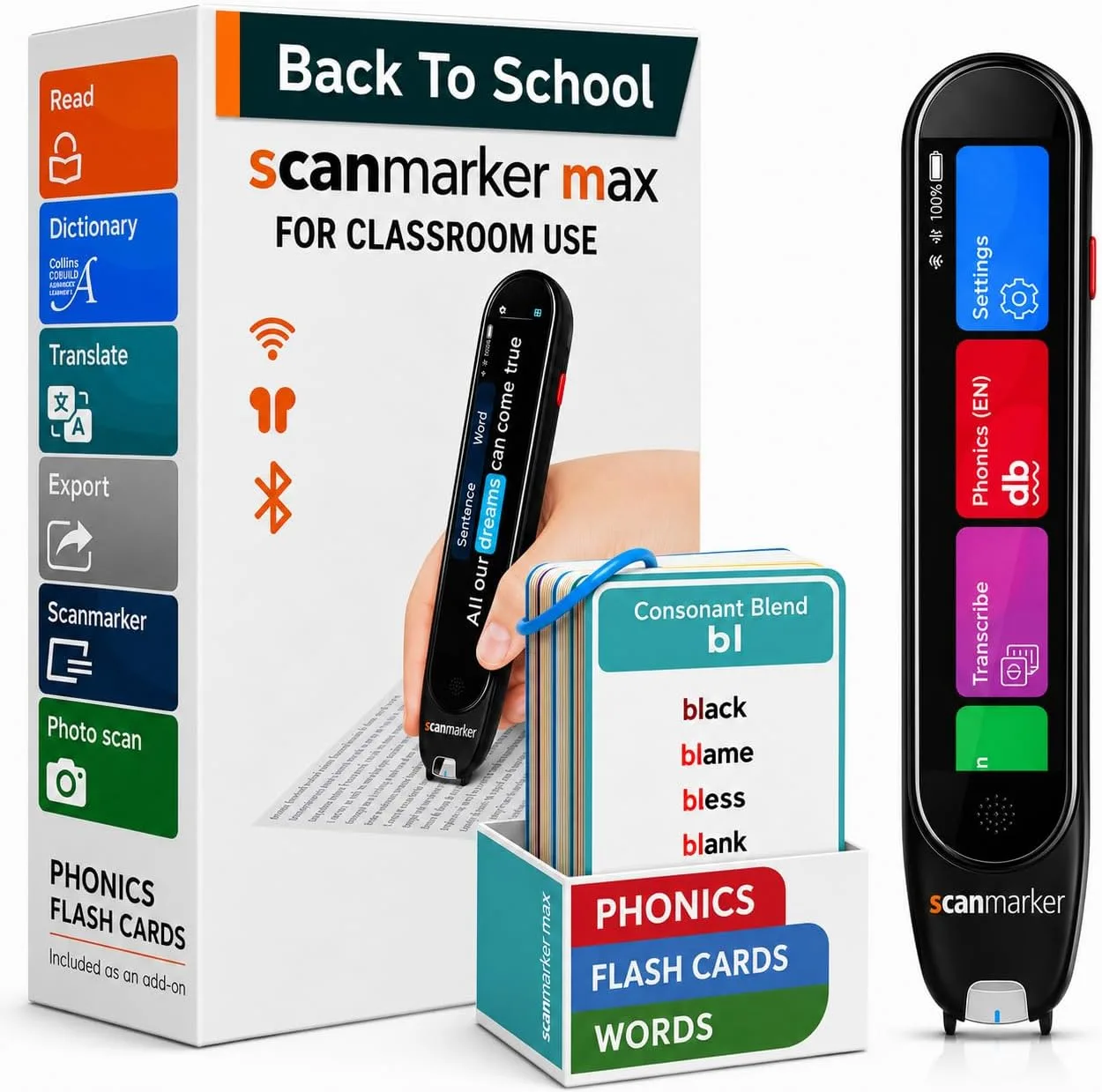
| Scanmarker Max Bundle | IEP/504 Special Ed & Structured Literacy | $319 | Zero IT / Standalone | Yes (Proctor Certified Lock) | 30 Offline TTS / 112 Online | Ruggedized + Desk Stand & Cards |
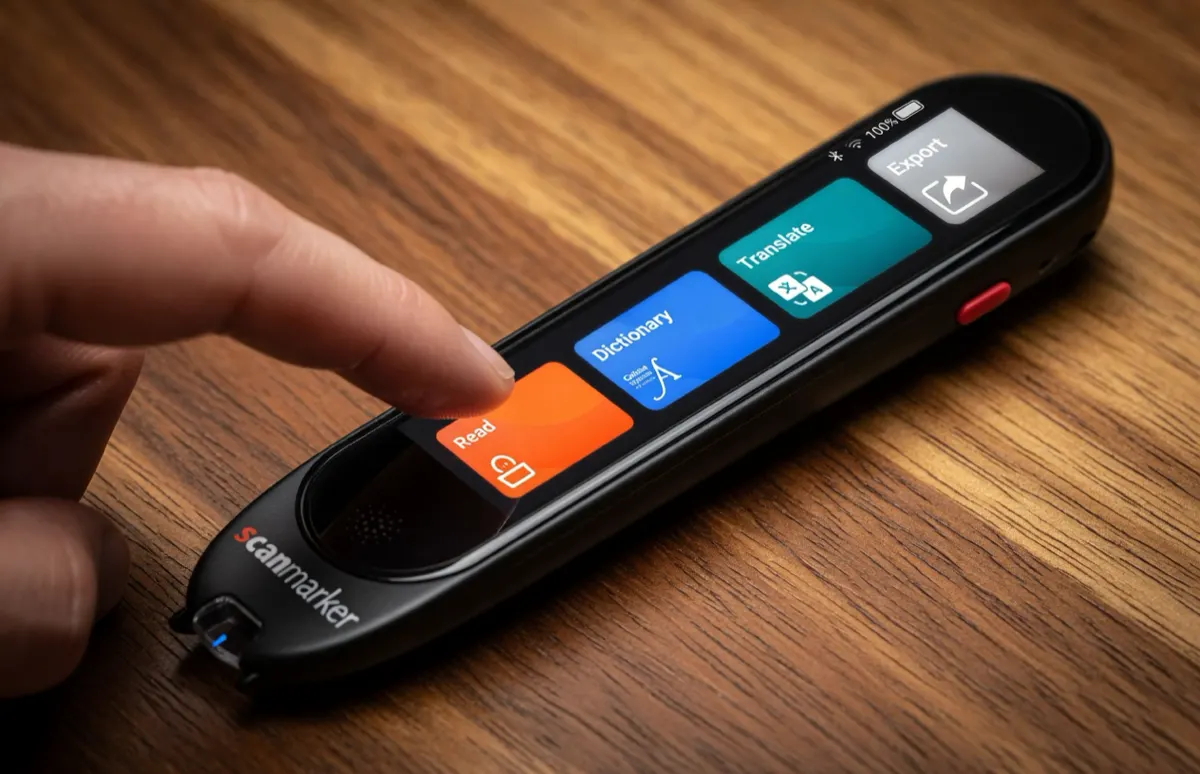
| Scanmarker Max | Standard Standalone Classroom Accommodation | $299 | Zero IT / Standalone | Yes (Proctor Certified Lock) | 30 Offline TTS / 112 Online | Polycarbonate drop-resistant chassis |
| Scanmarker Pro | 1:1 Chromebook & Laptop Classrooms | $249 | Install Chrome / Win Driver | N/A (Connected Peripheral) | 112 Online Languages | Lightweight slim ergonomic design |
| Scanmarker PAL | Elementary Classrooms & Library Checkout | $179 | Zero IT / Standalone | Yes (Hardware Locked) | English Only (Offline) | Heavy-duty impact-resistant shell |
Exam-Lock Mode: Protecting Academic Integrity on High-Stakes Assessments
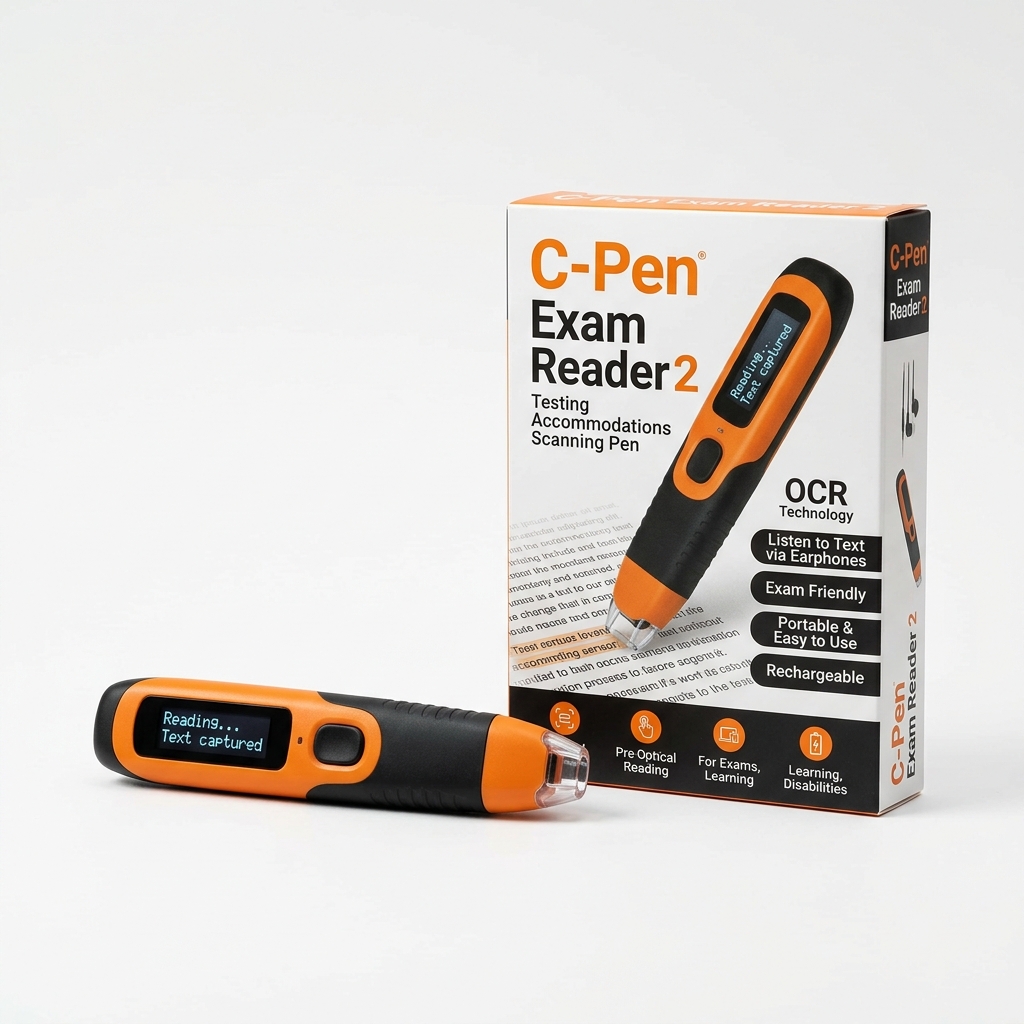
A critical concern for district testing coordinators is ensuring that assistive technology does not compromise the security or validity of state assessments, midterms, or standardized tests (such as the SAT, ACT, AP, or GCSE exams).
Standard scanning pens often include translation dictionaries, internet connectivity, and internal voice recorders—all of which are strictly prohibited in testing centers. The <b>Scanmarker Max</b> addresses this with a dedicated <b>Exam-Lock mode</b>:
- When activated by a proctor, the system permanently disables Wi-Fi access, translation dictionaries, memory storage, and external file access.
- Only the neutral, unassisted optical text-to-speech engine remains active, allowing the approved student to hear exam prompts independently without receiving unfair linguistic or factual assistance.
- A visible on-screen lock indicator confirms compliance at a glance, allowing proctors to verify the device in seconds without technical expertise.
Student Data Privacy: COPPA, FERPA, and Zero-Cloud Architecture
Federal regulations—including the <b>Family Educational Rights and Privacy Act (FERPA)</b> and the <b>Children's Online Privacy Protection Act (COPPA)</b>—mandate strict safeguards over student Personally Identifiable Information (PII) and classroom data.
Standalone reading pens like the Scanmarker Max and PAL feature a <b>zero-cloud, offline-by-default architecture</b>. When used in the classroom:
- No student name, ID, or login credentials are required.
- No scanned educational materials, text passages, or audio recordings are transmitted to external cloud servers.
- The hardware operates completely detached from the internet, completely eliminating data harvesting risks and simplifying district cybersecurity compliance reviews.
Fleet Durability, Battery Management, and Classroom Total Cost of Ownership
Classroom hardware must withstand demanding daily use by multiple students. The physical design of Scanmarker school-ready pens includes:
Drop-Resistant Enclosures: High-impact polycarbonate thermoplastic protects internal optical lenses and sensors against accidental drops from standard school desk heights (up to 1.2 meters).
All-Day Battery Runtime: Battery life ranges from 12 to 16 hours of continuous active scanning, allowing devices to complete an entire school week of typical intermittent use on a single charge.
Standard USB-C Charging: Universal USB-C charging ports mean schools can charge fleets using existing multi-port classroom charging carts, eliminating proprietary cable clutter.
Funding Pathways: Navigating Federal, State, and District Budgets
School districts can fund assistive reading pen purchases through multiple federal and state educational grant categories:
1. IDEA Part B (Individuals with Disabilities Education Act): The primary federal grant supporting assistive technology for students with documented disabilities. Funds may be allocated for devices written into approved IEP accommodation plans.
2. Title I, Part A: Federal funds allocated to improve the academic achievement of disadvantaged students. Reading pens deployed in school-wide intervention programs qualify under reading literacy improvement initiatives.
3. Title III: Dedicated federal funding for English Language Learners (ELL) and immigrant students. Multilingual pens with real-time translation (like the Scanmarker Max or Pro) qualify as language acquisition support tools.
4. ClassWallet and State Micro-Grant Programs: In states with educational scholarship accounts (ESA) or direct teacher micro-grants, approved vendors allow educators and parents to purchase reading pens directly using allocated funds.