
The Cognitive Science of Dyslexia: Bypassing the Phonological Decoding Bottleneck
When a reader without dyslexia encounters a printed sentence, decoding occurs automatically in fractions of a second, leaving their entire working memory available to analyze meaning, synthesize concepts, and make critical connections. For a student with dyslexia, decoding consumes virtually all cognitive bandwidth. By the end of a single paragraph, mental fatigue sets in, reading stamina collapses, and comprehension suffers.
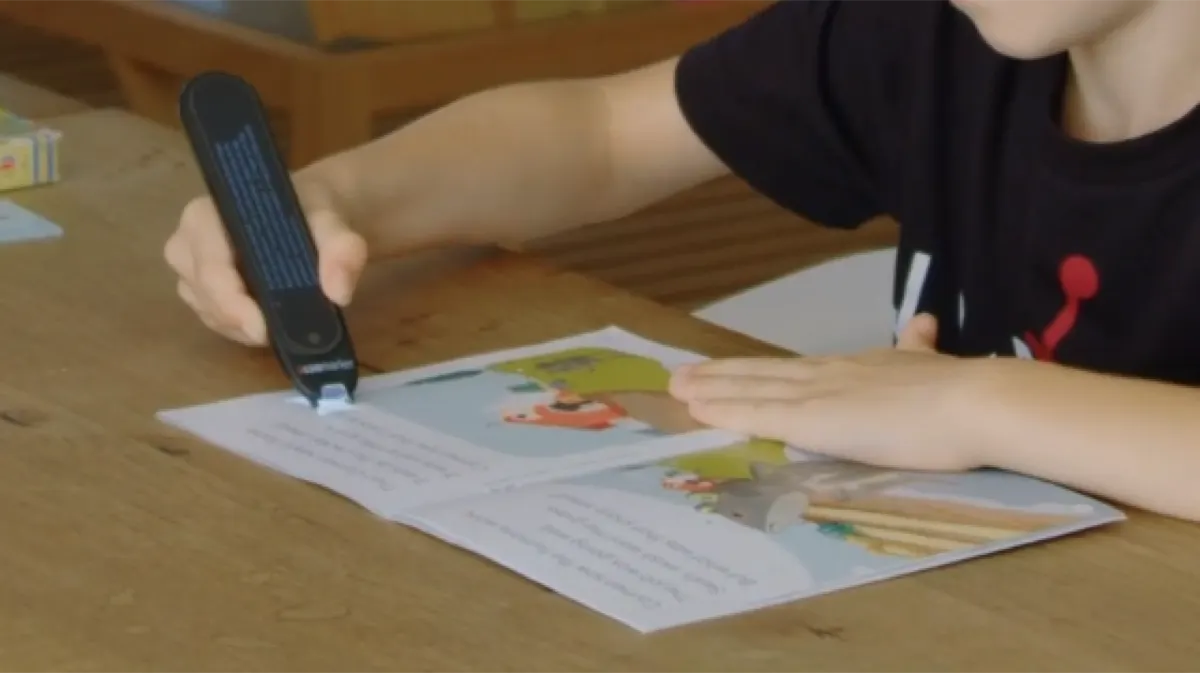
Assistive reading pens eliminate this mechanical hurdle. By gliding the pen across a word, sentence, or complex paragraph, the reader hears the text spoken aloud instantly through a speaker or private headphones while simultaneously viewing the highlighted words on an on-screen display.
Auditory-Visual Dual Coding: Synchronizing Sight and Sound
The effectiveness of reading pens is grounded in cognitive literacy research, specifically Allan Paivio's <b>Dual-Coding Theory</b>. Humans process information through two separate sensory channels: visual and auditory. When an individual with dyslexia only reads visually, the visual-phonological pathway is compromised.
When they use a reading pen with synchronized on-screen tracking:
- Visual Input: The reader sees the printed word on the physical page and tracks the highlighted words across the pen's digital display.
- Auditory Input: The reader simultaneously hears the crisp, naturalistic speech synthesis of each word in real time.
- Orthographic Mapping: This simultaneous dual sensory stimulation helps anchor the orthographic form of unfamiliar words in long-term memory, accelerating reading fluency over time rather than fostering dependency.
Structured Literacy: Why Phonics and Syllabification Modules Matter
Not all reading pens are created equal when it comes to dyslexia intervention. Simple text-to-speech devices act solely as an accommodation—reading words aloud without teaching how those words are constructed.
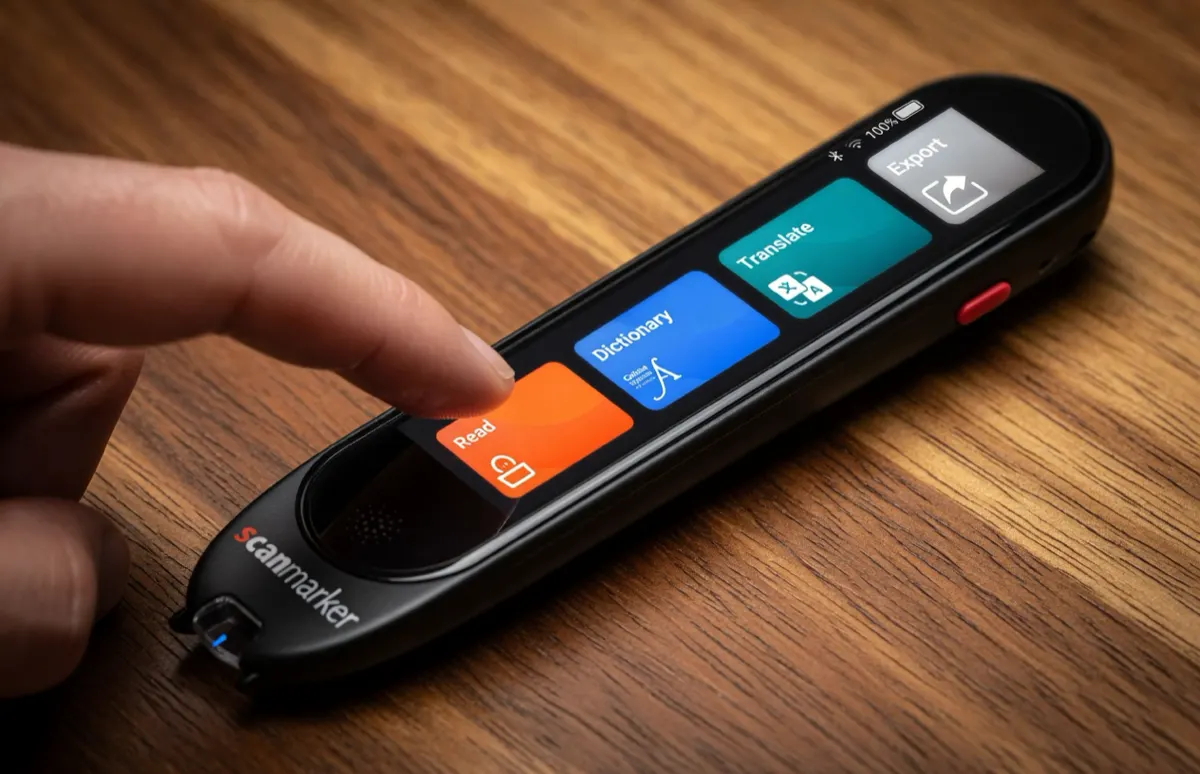
In contrast, modern assistive devices aligned with <b>Structured Literacy</b> and the Science of Reading (such as the <b>Scanmarker Max</b>) incorporate an active <b>Phonics Module</b>. When a student encounters a difficult multisyllabic word (e.g., "extraordinary" or "photosynthesis"), the pen deconstructs the word into its component syllables and phonemes directly on the color touchscreen. This provides explicit, systematic decoding reinforcement right at the point of reading frustration, transforming the pen from a passive reading aid into an active literacy instruction tool.
Standalone Reading Pens vs. Screen Distraction: Promoting Dignity and Focus
Many school districts and parents initially attempt to support dyslexic readers using iPads, Chromebooks, or smartphone apps. While digital tools have their place, they introduce serious challenges in real-world classrooms:
- Distraction and Disengagement: Handing a struggling student a connected tablet invites temptation—social media, games, YouTube, and incoming notifications constantly break study flow.
- Social Stigma: In a classroom where everyone is reading a physical paper novel or textbook, pulling out a large iPad or holding a smartphone over the desk signals to peers that the student is "different," often causing students to refuse the accommodation.
- Tactile Disconnection: A standalone reading pen (like the Scanmarker Max or PAL) looks and feels like a sleek study highlighter. The student holds physical books, engages with classroom worksheets, and listens privately through discreet wired or wireless earbuds with complete dignity.
Dyslexia Reading Pen Comparison: Leading Assistive Models
All models support standard 3.5mm headphones or Bluetooth earbuds for private listening. The Scanmarker Max is the only model in the category featuring an onboard phonics module that segments words into distinct phonemes on-screen.
| Model | Type | Price | Phonics & Syllables | Display | Offline Read-Aloud | Exam-Lock | Best For |
|---|---|---|---|---|---|---|---|
| Scanmarker Max | Standalone Edge AI | $299 | Yes (Onboard Phonics Module) | 2.4" Color Touchscreen | 30 Languages (100% Offline) | Yes (Proctor Certified) | K-12 & college students needing structured decoding and exam readiness |
| Scanmarker Max Bundle | Standalone Edge AI | $319 | Yes (Includes Physical Phonics Cards) | 2.4" Color Touchscreen | 30 Languages (100% Offline) | Yes (Proctor Certified) | Comprehensive home study & IEP specialized structured literacy programs |
| Scanmarker PAL | Standalone Read-Aloud | $179 | Word Read-Aloud | 1.9" High-Contrast LCD | English Only (100% Offline) | Yes (Hardware Locked) | Early elementary readers & rugged general classroom checkout |
| Scanmarker Reader | Connected Audio | $149 | Audio via Host Software | No Screen (Uses Laptop) | Via Host Device | N/A (Host Dependent) | Budget reading accommodation for 1:1 computer classrooms |
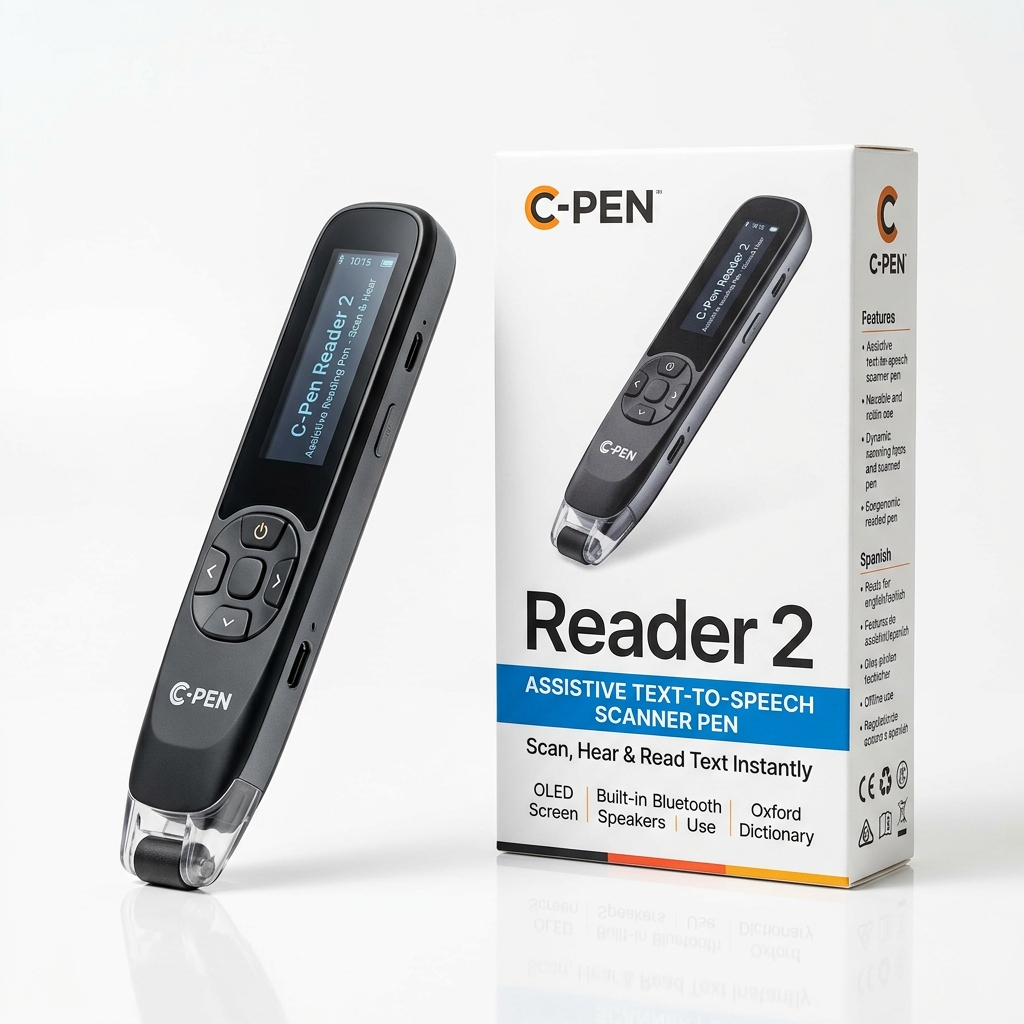
| C-Pen Reader 3 | Standalone Audio | ~$329 | Word Read-Aloud (No Phonics) | Color OLED Screen | English, Spanish, French | Partial (Firmware Lock) | Established assistive reading pen with audio playback |
Writing Reading Pens into IEP and Section 504 Accommodation Plans
To ensure a student can utilize a reading pen legally in school and during assessments, the device must be formally specified in their <b>Individualized Education Program (IEP)</b> or <b>Section 504 Plan</b> under Assistive Technology accommodations.
Special education advocates recommend using explicit, legally sound phrasing during accommodation reviews:
"Student shall be provided access to a handheld optical reading pen (with text-to-speech audio output and headphone connectivity) for all instructional reading, classroom worksheets, and testing environments to support phonological decoding deficits. When used during standardized or high-stakes assessments, the device shall be placed in an administrative Exam-Lock mode to disable unauthorized dictionaries, memory storage, or external connectivity while preserving read-aloud functionality."
Standardized Testing and Exam-Lock Compliance
High-stakes testing organizations—including the College Board (SAT, AP exams), ACT Inc., state education boards, and UK GCSE/A-Level exam boards (JCQ)—maintain rigorous regulations regarding electronic aids in examination halls.
Standard pen scanners with translation dictionaries, Wi-Fi connectivity, or internal text recording are strictly prohibited because they create an unfair advantage. However, pens equipped with a certified <b>Exam-Lock mode</b> (such as the Scanmarker Max) permanently disable internet connectivity, dictionaries, and stored memory behind an administrative password or hardware lock, leaving only the neutral text-to-speech reading engine active. This allows approved students to complete exams independently without requiring an expensive, distracting human reader.
Actionable Advice for Parents and Special Educators
When introducing a reading pen to a student with dyslexia, follow these pedagogical best practices:
1. Start in Low-Pressure Environments: Do not introduce the pen on test day. Allow the student to use it at home with favorite high-interest books, graphic novels, or leisure reading to build scanning fluency and confidence.
2. Optimize Speech Rates: Most students initially benefit from a speech speed of 0.8x to 1.0x. As their auditory processing accelerates, encourage them to increase playback speed to 1.2x or 1.4x to match their natural listening comprehension pace.
3. Combine with Highlighting: Encourage students to scan difficult words first rather than scanning entire pages continuously. Using the pen as a targeted decoding tool preserves their natural reading rhythm while eliminating stumbling blocks.